Applegarth
Mariners' Museum, Uncurated Search Results
Type: Crab Scrape
Year: 1977
Builder:
Location:

These records are found in the online catalog of The Mariners’ Museum and Park in Newport News, Virginia. Uncurated search results are presented to give researchers and interested readers an idea of whether the museum’s archives contain information about this vessel and whether it may be worthwhile to visit the museum’s catalog search page for further investigation. Uncurated results may be inaccurate or incomplete.
Search mode: Exact Name. Search phrase(s): "Applegarth". Results returned: 6. Results displayed in this table: 6.
Use these buttons to send uncurated search results to your own app or text document for further research. First, check the box for any row, or click "Select All" then uncheck any rows. Then click "Show Selections". You can then copy your selections from the text box and past them into your app.
| Fetch? | Row ID | Media | Date | Vessel | Place | Related Places | Inscription/Marks | Subject | Notes | Archive Number |
|---|---|---|---|---|---|---|---|---|---|---|
| 1 | 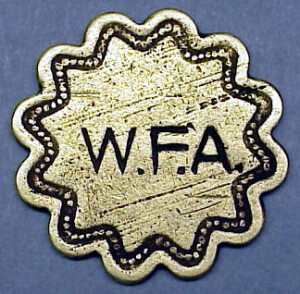 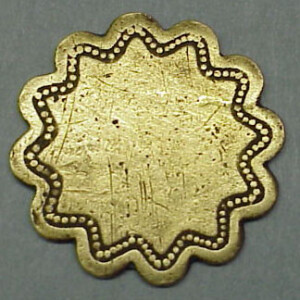 | SHORT DESCRIPTION: The token is brass and is scalloped or flower shaped. There is a patterned border inside the outside edges of the token on both the obverse and the reverse. | CL28485 | |||||||
| 2 | 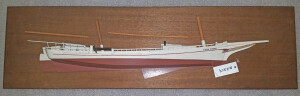 | MODEL NOTES: Rigged and cataloged as a three-sail bateau, which is believed to be the only type-name properly used for such two-masted vessels with a hull much like that of the single-masted (two-sail) bateau or "skipjack" (see GERTRUDE WANDS, MR 203/ 1954.36.1), but a little narrower relative to length. The THELMA G. ROBERTS' hull has a round stern, rather than transom, an allowable variant of the skipjack hull that is also found in the two-sail version. The three-sail bateau rig is shared by a round-bottomed boat called a "bugeye" (see NORA E. LAWSON, MR 205/ 1954.37.1). The bugeye rig, with smaller sails, allowed smaller crews because it was easier to handle in heavy weather, but it had less power in light winds. ADDITIONAL INFORMATION: Chapelle, Howard I., "Notes on Chesapeake Bay Skipjacks," in AMERICAN NEPTUNE. Vol IV (1944), pp.269-303; also available as separate reprint. LABEL COPY: Bateau Thelma Roberts (1897-1937)/ Half model, scale 3/8"=1', circa 1954/ William E. Geoghegan, model maker/ Museum Collection/ 54.35 (label for Chesapeake Bay Gallery - September, 1989) VESSEL INFORMATION-- VESSEL NAME: THELMA ROBERTS NATIONALITY: American VESSEL TYPE: 3 Sail Bateau SERVICE DATES: 1897-1937 BUILDER LOCATION: Maryland, Applegarth VESSEL DIMENSIONS: 6 gross tons; 45.3 x 14 x 2.7 | CL24943 | |||||||
| 3 | 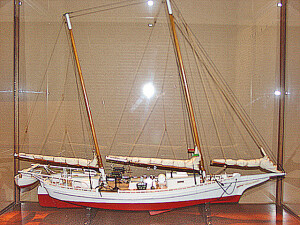 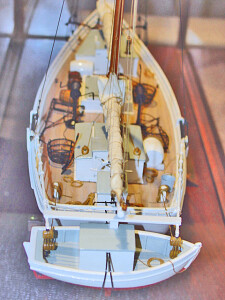 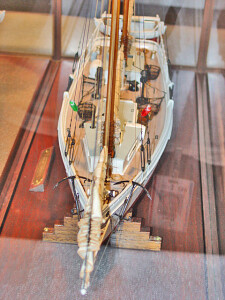 | SHORT DESCRIPTION: The bugeye "Thelma Roberts" was built at Applegarth, Maryland in 1897. Her register dimensions were 45.3 feet length, 14.0 feet beam, 2.7 feet depth in hold, and 6 register tons. She carried a crew of four. She was reputed to have been a very fast sailer and worked well. The ship was abandoned at Farm Creek, Dorchester County, Maryland in 1935. The 3/8 inch scale model was built from plans supplied by Howard I. Chapelle at the Smithsonian Institution. Materials used in its construction were loblolly pine, American holly, rock maple, ebony, basswood and English boxwood. The metal parts are brass. The lines are of cotton, French lined and cuttyhunk fishing lines. The three small kegs on the deck were made of teak which came from the original "America," acacia from Nelson's "Victory," and white oak from the "Constitution." The model is made entirely by hand. Over a period of 13 months over 1700 hours were spent building the model and the case. | CL29168 | |||||||
| 4 | 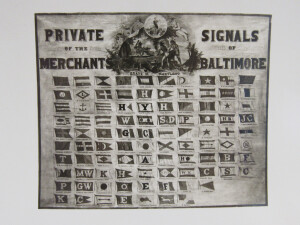 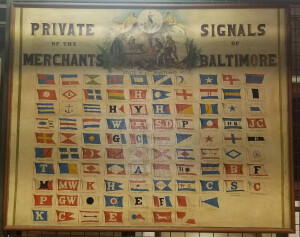 | SHORT DESCRIPTION: Oil on canvas by unidentified artist of private signals of Baltimore merchants, mid 19th century, ten rows and ten columns of flags (total 95) on yellowed white background, green lined border. Center of vignette shows various indian maidens or allegorical figures plus one of indians burning a log to make a dugout canoe. NOTES: A. Brown & Sons is Alexander Brown, who had nearly 13 partners in his banking firm. F.W. Brune & Sons is Frederick W. Brune (1776-1860) who started the company with his sons, John Christian Brune and William H. Brune. Frederick had worked with Von Kampf who died in 1828 so Brune started his own company. J. Corner & Sons stands for James Corner, they owned wharf property in at least 1860. Hugh Jenkins & Co. existed in 1859 when Col. J. Stricker Jenkins (Hugh's son) joined the firm at age 28. The firm became one of the largest coffee importers in the country. Col. Jenkins died 1878 leaving his brother, Benjamin W. Jenkins, as the sole partner remaining. Jas. A. Hooper is James A. Hooper, a merchant who started a shipcandlery and grocery company with his father, William, and Benjamin Hardester in 1836. His obituary in The Baltimore Sun, May 20, 1897, said he also traded in coffee from Rio and indentured servants from China, then later entered the banking world as Hooper, Reese, & Co., he was 82 when he died. T.J. Hand & Co. - From 1851-1861 William Hand Browne worked with his cousin, T.J. Hand as commission merchants. They were export merchants and traded mostly with Peru on a clipper called Seaman’s Bride (From the Johns Hopkins University Circular, "In Memoriam William Hand Browne, 1913) Henry M. Warfield lived from 1826-1885, he was a merchant, senior director of the B&O Railroad, and founded of the Baltimore & Havana Steamship Company in 1866. The Daily Exchange newspaper reported in 1860 that the company Davies & Warfield was dissolving because Davies had died, and that Henry M. Warfield was partnering with A.R.H. Ranson to create Henry M. Warfield & Co. for the purpose of conducting general and milling business. Henry M. Warfield & Co. is listed as the agents for the BHSC in 1866. Kirkland Chase & Co. was owned or started by Thorndike Chase, dealt in West Indian trade in sugar and coffee but went bankrupt in 1873 Spence & Reid - From the portrait collection of Johns Hopkins Medical Institutions: William Wallace Spence was born in 1815 and came to America at age 18 from Scotland. When he moved to Baltimore (after first living in New York) he met Andrew Reid and began the firm known for building clipper ships. He started or was involved in several other ventures, Spence died in 1915. The company appears in newspapers as early as 1848. From The Baltimore Sun, July 4, 1874, the partnership of Spence & Reid became Spence, Montague, & Co. working in general commission business, signed William W. Spence, James C. Spence, Dibbell P. Montague, and William W. Spence, Jr. Fritzgerald Booth & Co. should be spelled Fitzgerald; Washington Booth and Captain Richard G. Fitzgerald formed a partnership about 1846. Fitzgerald stayed in Baltimore and Booth went to Lima, Peru. (From History of Baltimore City and County From the Earliest Period to the... 1881, page 771) B.M. Hodges, Junior - B.M. Hodges, Jr & Co. was an importer and shipping merchant at 49 Exchange Place in 1874. Ship Casilda built for them in 1856, was 950 tons. Foard & Rogers was Joseph O. Foard and C. Howard Rogers, the firm dissolved in 1868 when Rogers left and Foard continued working under the name Joseph O. Foard & Co. (From The Baltimore Sun, 4 April 1868), he died in 1908 (see obituary). Friend & Ricketts & Co. – Should be Friend, Ricketts & Co.; (From The Baltimore Sun, February 4, 1863) Dissolution of Co-Partnership with Alfred Friend, Wesley Ricketts, and Thomas Henry Fitzgerald because Fitzgerald left the company. The name didn’t change. W. Rhoads & Son - John R. Rhoads was a shipbroker for the company in 1873 at Pratt St. and Smith’s Wharf W.H.D.C. Wright & Co. William Henry DeCourcy Wright James Cheston & Son – James Cheston (1779-1843) and son Galloway (born 1806-1881), Galloway worked with his father in the company for 55 years as a manufacturer and shipper of flour. He also owned many ships that allowed him to trade frequently with Brazil for coffee. Galloway Cheston died March 9, 1881 according to his obit in The Baltimore Sun on March 10, 1881, page 4. The company is listed in the 1841 Maryland Colonization Journal as a subscriber. James Hooper & Sons – Stockholders in Farmers’ and Planters’ Bank for 1840. Annual Report of the Baltimore Chamber of Commerce for the Year 1880, Volume 25 has Henry Hooper of the company at 8 Spear’s Wharf, as well as Thomas L. Ramsey. A. Schumacher & Co. began in 1823 shipping tobacco, cotton, and passengers between Baltimore and Germany. Albert Schumacher partnered with North German Lloyd in 1868 to become their general agents in the city. NGL advertisements have their address as 5 South Gay Street in 1891, and by 1914 they worked from 306 Charles Street in what was known as the Hansa House. The firm also worked as agents for the Allan Steam-Ship Company in 1889. See The Baltimore Sun, 16 December 1911. F.L. Brauns & Co. – German shipping house, existed as early as 1849 when Werner Dresel joined the firm as a partner, they were a Tobacco and General Commission House. The firm became W. Dresel & Co. in 1872 with brother Ferdinand Dresel, became Dresel, Rauschenberg, & Co. in 1876 when Herman Rauschenberg joined. (From The Monumental City: It’s Past History and Present Resources by George Washington Howard, page 863.) Schaer & Kohler appears in newspapers as early as 1854, worked as shipping and commission house from 69 Exchange Place by 1860. D.H. Watjen & Co. was a German company founded in 1821 by Diedrich Heinrich Watjen, became D.H. Watjen & Co. in 1829, his son Christian Heinrich Watjen took over in 1858. By 1914 they had three ships which were all impounded with WWI and they did not restart the company after the war. Schwartz & Dix were importers and dealers in fruit at 112 W. Lombard Street in 1860 though they appear in newspapers at 117 Lombard St. between 1858-1859. Kelsey & Gray were shipbrokers and commercial merchants in as early as 1851 and as late as 1868 on Pratt Street. The Maine Historical Society has a letter from a father to his wife that the company took up subscriptions to provide barrels of food to imprisoned soldiers during the Civil War, including their son. The owners were Henry Kelsey (hence the HK on the flag) and Andrew Gray, who both lived in 58 E. Baltimore in 1858-1859 according to the city directory. They co-owned the schooner George Latimer which left Baltimore in 1864 but was captured and destroyed by the Florida. Brothers Boninger, possibly spelled Bonninger, was a German shipping firm started as early as 1849 to ship tobacco. Lambert Giddings owned the ship Sir John Franklin which ran ashore in January 1868 and lost 12 sailors including the captain, though eight survived. John Currier Jr. was a shipbuilder who worked in Newburyport, MA. Between 1831 and 1843 he built six ships for the Black Ball Line and several others but launched almost 100 ships between 1831 and 1884. Currier retired in 1884 and died in 1887. (From City of Newburyport preservation statement for the house he used to own at 342 Merrimack Street). His connection to Richmond is unclear. Whedbee & Dickinson were James S. Whedbee and John S. Dickinson. They appear in newspapers in the mid-1850s and were commission merchants in cotton and southern lumber. The New Bern, NC paper, The Daily Journal reported on 7 June 1892 that their property at Old Dominion Wharf was being sold at auction. Sterling & Ahrens were shipping merchants who wound up with too much molasses in 1875 and went bankrupt. (From The Star Tribune [Minneapolis] 28 August 1875. James Carey Coale's April 14, 1891 obituary from The Baltimore Sun on page 6 says Mr. Coale died the night before, had “been engaged in the insurance business as agent for the Lloyds and foreign and American underwriters and adjuster of marine averages and as steamship passenger agent in this city since 1852. The firm name was James Carey Coale & Cunningham, with office at 27 South Street.” Born May 25, 1825 “engaged in the shipping business on his own account in 1847, but gave it up in 1852 for marine insurance. In 1858 he was appointed agent for Lloyds.” Thomas Pierce was a coffee importer who owned the brig Red Wing (built in 1857) which was lost at sea in November 1873 (From the Baltimore Sun). W.H. Perot is William H. Perot whose 9 June 1903 obituary in The Baltimore Sun reports that he was the head of the shipping company W.H. Perot, Son, & Co. at 33 South Gay Street. He was born to an English family in Bermuda in 1826, started A.W. Perot & Co. with his brother and he moved in Baltimore in 1855 to continue working. He owned several clipper ships. Oelrich & Lurman should be Oelrichs; Henry Ferdinand Oelrichs was a senior partner in the firm, E.G. Oelrichs and Gustav W. Lurman (distant cousins) started E.G. Oelrichs & Lurman in 1830, then Henry Oelrichs joined as a junior partner in 1838. When E.G. left in 1842 Henry and Gustav formed a new company, Oelrichs & Lurman. Henry left in 1861, and the firm became Lurman & Co. (From “German Merchants in the Nineteenth Century Atlantic” by Lars Maischak, pages 44-46) Rose & Lyon was at the corner of O’Donnell’s wharf and Pratt St as agents for New York Packets in 1860. Ira C. Lyon’s obituary in The Baltimore Sun, 24 November 1898, page 10 says that he was born in Connecticut and moved to Baltimore at age 16. He started the firm with John Rose in 1850 which lasted until Rose died 15 years ago (about 1883). Wm. Applegarth & Son – (From Baltimore Brick By Brick) William Applegarth captained ships then owned them, then was a master broker. He died in 1873 but his sons, Nathaniel & Thomas, continued the business. J. Hooper & Co. were shipbrokers at Gay and Lombard Streets Floating School was just that, a school on a ship to train sailors in the merchant trade. Captain Robert Leslie began the school on September 14, 1857, though the approval process began in 1850. The school was necessary because there was a lack of sailors who could manage the expanded trade to California and the Pacific. The committee received approval from the Navy to purchase the ship Ontario to be used for the purpose. The Ontario had been a sloop of war built in 1813 but had become a receiving ship before the school purchased it. Many of the companies and people represented on this flag provided funding to purchase the Ontario. From A Brief History of the Establishment of the Floating School of the City of Baltimore, published by Bull & Tuttle, 1860. M.A. Mitchell (From The Daily Exchange, June 8, 1860) Notice of Dissolution of Co-Partnership between John H. Travers and Marcellus A. Mitchell of firm Travers & Mitchell because Travers died. Notice is dated December 29, 1859. “Marcellus A. Mitchell will continue the ship chandlery, ship brokerage and commission business at the old stand, No. 2 Spears Wharf, for and on his own account, risk, and benefit.” Steamer "Mary Washington" was operated by the Weems Line, which started in 1819 and was incorporated in 1827. Weems Line was one of the first and eventually one of the oldest passenger-freight steamboat lines operating between Baltimore and Patuxent and the Rappahannock River points. Weems Line survived individually for 88 years then merged with other lines that lasted through the 1920s. (From Calvert Marine Museum's Bugeye Times, Vol. 41, No. 4, Winter 2016-17.) Mary Washington was purchased in 1854, abandoned in 1888. (From Calvert Marine Museum's Bugeye Times, Vol. 7, No. 4, Winter 1983.) The Baltimore & Susquehanna Steam Company operated two steamers, but side-wheel steamers Mary Washington and Wenonah were connected to the line operating on different days. "They measure 200 feet in length, 28 feet beam, and 9 1/2 feet hold, with respective capacity of 700 tons." (From The Stranger in Baltimore: A New Handbook... 1866, page 153) J.W. Hugg & Son owned the bark Maggie V. Hugg Steamer William Selden was chartered by the Baltimore Steam Packet Company, they then purchased it in 1859. April 1861 in Portsmouth the Confederates interned her and was used her in the Norfolk harbor until October 10, 1862 when Confederates burned her as they evacuated Norfolk and Portsmouth. (From William and Mary Quarterly, October 1938, Vol. 18, No. 4) Steamer "Cecil" was a Union transport steamer, used in 1863 to take slaves away from their owners. A journal from the steamer was up for auction and not sold but made note that the Cecil was privately owned but hired by Union to transport military recruits and ordnance, contract signed August 1863. Steamer "Planter" was a side-wheel steamer built by the Weems' Steamboat Line in 1845 (similar narrative to the Mary Washington). George Weems' three sons captained the boats he built, Captain Theodore Weems on "Planter." "Planter" ran into Fort Carroll in the Patapsco River in 1855 and sank but was raised and used by the Government in the Civil War. She was abandoned in 1881. (From Calvert Marine Museum's Bugeye Times, Vol. 7, No. 4, Winter 1983.) Steamer "Geo. Weems" was part of the Weems' Patuxent River Line. "The side-wheel steamers 'Matilda' and 'George Weems' compose Weems' Passenger and Transportation Line, running Wednesdays and Fridays, for Fairhaven, Plum Point and the Patuxent River. They are about 200 feet long, 28 feet beam, and 9 feet hold, with an average capacity of 650 tons." (From The Stranger in Baltimore: A New Handbook... 1866, page 154). The "George Weems" was built in 1858 replaced the "Patuxent" steamer, but burned June 10, 1871 and was replaced by the "Theodore Weems" steamer in 1872. (From Calvert Marine Museum's Bugeye Times, Vol. 7, No. 4, Winter 1983.) "Lioness & Tigress" were steam tugs of the Monumental Line J.F. Farland was a schooner, wrecked at Cape Hatteras Nov. 30 1872 with 216 bales of cotton and 350 tons of phosphate for Boston, the crew survived. (From Commercial and Financial Chronicle and Hunt’s Merchants’ Magazine 1872) W.T. Kendall was William T. Kendall who imported guano as early as the 1850s. Steamer "Hugh Jenkins" was built in 1849 for Eastern Shore Steamboat Company, part of USQMD from 1861-1866, sold March 1, 1866 to Kent Island Steamboat Co. and changed names to Kent Island. | CL12615 | |||||||
| 5 | 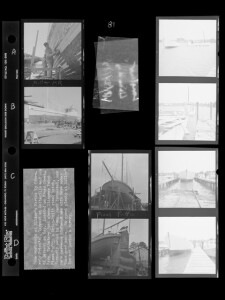 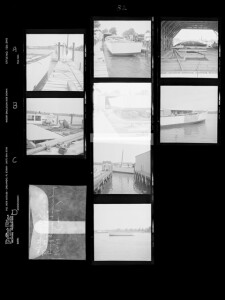 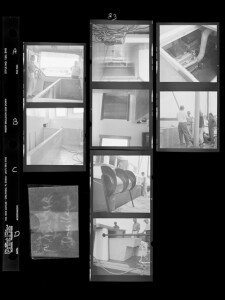 | 1992 | Chesapeake Bay (Md. and Va.)–Photographs.; Chesapeake Bay Region (Md. and Va.)–Photographs.; Piney Point (Md.)–Photographs.; Wachapreague (Va.)–Photographs. | Marine railways–Chesapeake Bay Region (Md. and Va.)–Photographs.; Boatyards–Chesapeake Bay Region (Md. and Va.)–Photographs.; Skipjacks–Chesapeake Bay Region (Md. and Va.)–Photographs.; Waterfowl–Chesapeake Bay (Md. and Va.)–Photographs.; Waterfowl–Chesapeake Bay Region (Md. and Va.)–Photographs.; Shore birds–Chesapeake Bay Region (Md. and Va.)–Photographs.; Sailboats–Chesapeake Bay (Md. and Va.)–Photographs.; Sailboats–Chesapeake Bay Region (Md. and Va.)–Photographs.; Fishers–Chesapeake Bay Region (Md. and Va.)–Photographs.; Boaters (Persons)–Chesapeake Bay (Md. and Va.)–Photographs.; Fishing boats–Chesapeake Bay Region (Md. and Va.)–Photographs.; Truck drivers–Chesapeake Bay Region (Md. and Va.)–Photographs.; Tugboats–Chesapeake Bay (Md. and Va.)–Photographs.; Tugboats–Chesapeake Bay Region (Md. and Va.)–Photographs.; Human beings–Chesapeake Bay Region (Md. and Va.)–Photographs.; Lumber trade–Chesapeake Bay Region (Md. and Va.)–Photographs.; Boatbuilding–Chesapeake Bay Region (Md. and Va.)–Photographs.; Crab industry–Chesapeake Bay Region (Md. and Va.)–Photographs.; Marinas–Chesapeake Bay (Md. and Va.)–Photographs.; Marinas–Chesapeake Bay Region (Md. and Va.)–Photographs.; Oil spills–Chesapeake Bay (Md. and Va.)–Photographs.; Porpoises–Chesapeake Bay (Md. and Va.)–Photographs. | Contains photographic negatives of Miller's marine railway, Pederson's boatyard, striker boats, skipjacks, the boat "Edith & Linda", waterfowl, shorebirds, Pederson-Alexander marine railway, the boat "Elsworth", Wingate, Maryland, the boat "Doris Eugena", fishermen and boaters, Rice's marine railway, scalloper boats, truck driver Walt Southard, the boat "Camelot" and her crew, tug boats, the boat "Jack Tar", Rice's marine railway main office, Carl Rice, Slater Rice, the boat "Lantana", the boat "Fiametta", the boat "Maggie Lee", the tugboat "Sabot", cedar wood shipment at Rice's marine railway, the pilot boat "Pawnee", Chas Rice, the boat "Sachem", J. D. Krentz marine railway, Butler's marine railway, skipjack repairs, crab dredging, H. A. Bulifant, the boat "Cristobal", the boat "Sea Sprite", Stephens' marine railway, whalers, the boat "Sherwood", sailing boats, the boats "Van Dike" and "Annapolis", Alexander-Robertson marine railway, Bob Green's marine railway, Curtis Applegarth and storefront, the boat "Miles Rye" at Saint Michaels, Maryland, Knapp's Narrows, Frank Smart, W. H. Haynie, Tangier Island, White Stone, various unnamed marinas, Moodey Brothers boatyard, the boat "Memory", Frank Thompson docks and boats at Piney Point, Maryland, Topaz boats, Mount Harmony, Maryland, boatbuilding, Adjootian's boatyard, Benson's marine railway, siegel boat, Jones marine railway, Oxford boatyard, Fleeton Point marina, Wachapreague marina, oil-spill clean-up, porpoises in the Chesapeake Bay. | MS0199/02-12 | ||||
| 6 | 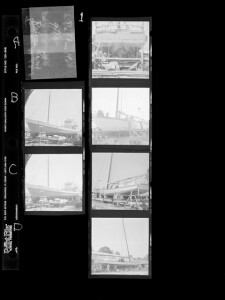   | 1960-1980 | Rappahannock Community College–Photographs. | Chesapeake Bay (Md. and Va.)–Photographs.; Chesapeake Bay Region (Md. and Va.)–Photographs.; Rappahannock River (Va.)–Photographs.; Potomac River–Photographs.; Great Wicomico River (Va.)–Photographs.; Yeocomico River (Va.)–Photographs.; Gwynn Island (Va.)–Photographs.; Tilghman Island (Md.)–Photographs.; Tangier Island (Va.)–Photographs.; Wachapreague (Va.)–Photographs.; Piney Point (Md.)–Photographs. | Sailboats–Chesapeake Bay (Md. and Va.)–Photographs.; Work boats–Chesapeake Bay Region (Md. and Va.)–Photographs.; Fishing boats–Chesapeake Bay Region (Md. and Va.)–Photographs.; Yachts–Chesapeake Bay Region (Md. and Va.)–Photographs.; Tugboats–Chesapeake Bay (Md. and Va.)–Photographs.; Tugboats–Chesapeake Bay Region (Md. and Va.)–Photographs.; Marine railways–Chesapeake Bay Region (Md. and Va.)–Photographs.; Marinas–Chesapeake Bay (Md. and Va.)–Photographs.; Marinas–Chesapeake Bay Region (Md. and Va.)–Photographs.; Menhaden industry–Chesapeake Bay Region (Md. and Va.)–Photographs.; Skipjacks–Chesapeake Bay Region (Md. and Va.)–Photographs.; Boatyards–Chesapeake Bay Region (Md. and Va.)–Photographs.; Rivers–Chesapeake Bay Region (Md. and Va.)–Photographs.; Barges–Chesapeake Bay Region (Md. and Va.)–Photographs.; Fishers–Chesapeake Bay Region (Md. and Va.)–Photographs.; Boatbuilding–Chesapeake Bay Region (Md. and Va.)–Photographs.; Yacht building–Chesapeake Bay Region (Md. and Va.)–Photographs.; Crabbing–Chesapeake Bay Region (Md. and Va.)–Photographs.; Oyster industry–Chesapeake Bay Region (Md. and Va.)–Photographs.; Crab industry–Chesapeake Bay Region (Md. and Va.)–Photographs.; Human beings–Chesapeake Bay Region (Md. and Va.)–Photographs.; Waterfowl–Chesapeake Bay (Md. and Va.)–Photographs.; Waterfowl–Chesapeake Bay Region (Md. and Va.)–Photographs.; Porpoises–Chesapeake Bay (Md. and Va.)–Photographs. | Contains photographic negatives of Deagle marine railway, the sailing and powered buy-boat "Rebecca Ruarck", the grain freighter "Sarah C. Conway", various wheelhouse engine controls, oyster buy-boats, shipments of soft-crabs, crabs and eel grass, trawlers, scallopers, the scallop boat "Sea Hawk", Della Rose's boat, Dennett marine railway, the Yeocomico river, Richardson's boat yard in Lloyd, Maryland, workwomen sanding ship sides, replica of the ship "Dove", construction at Glebe Point Boat Company, Wicomico river, yachts, Tiffany Cockrell, Tiffany boats making trials runs, workboats, divers and under water railway installations, the "Fancy Free" yacht trial run, the boat "Miss Cathy", fish holds, Gwynn's Island boat yard, yacht owners observing launches, the yacht "Achates", shrimp boats, fiberglass hulls for boats, fiberglass boats under construction, Hulls Unlimited in Deltaville, Virginia, Humphrey's marine railway in Weems, Virginia, the Maryland "Dove" under construction, E. M. Krentz marine railway at Harryhogan, Virginia, repairs on the boat "Lady Fair", Herman Krentz, steel sailing boats, the skipjack "Chester Peake", dead/damaged boats, J.D. Krentz marine railway in Ophelia, Virginia, herring, fish markets, fishermen, skipjacks, the boat "Lillian Ruth", P. R. Green boat yard, Maston Krentz boatyard, the official yacht of the Maryland governor "Maryland Lady", John Lowry's drydock, John Lowry, Cockrell's Creek, menhaden purse nets, Landard Lowry, large-launchings, Miller's boat yard, the crab-potter "The Kathy D. O.", Miller's marine railway, the workboat "Gertrude W.", Norton's marine railway, Len Lowry, Rappahannock Community College Dragon Run Waterman's Festival, barges, Potomac river, shipments of oyster shells for planting, the boat "Starfish" and its wheelhouse, the sight-seeing boat "Harbor Queen", tugboats, Virgil Miller, keel timbers, crab dredging, menhaden striker boats, the boat "Lady Esther", the Dutch-built boat "Pious Puffin", Pederson boat yard, Pederson-Alexander marine railway, menhaden fishing boats, Rice marine railway, the tugboat "Jack Tar", the tugboat "Camelot", the tugboat-yacht "Fiametta", the bugeye yacht "Cristobal", Stephens marine railway, Tancook whalers, Butler marine railway, Bob Green marine railway, Miles River Yacht Club in St. Michael's, Maryland, Curtis-Applegarth boatyard, Knapp's Narrows, Tilgham Island, the menhaden steamer "W. H. Haynie", the Tangier Island waterfront, citizens of Tangier Island, children of Tangier Island, Moody Brothers boat building shop in Deltaville, Virginia, Piney Point, Maryland, Van Dyke Inustrial Park, John Frye's home, Adjootian boatyard near White Stone, Virginia, Benson's marine railway, Jones marine railway, unnamed boatyard in Oxford, Maryland, Travellifts, Wachapreague Marina, Fleeton Point Marina, the Zapata-Haynie docks, various scenes of oil-spill clean-up near Dameron's Marsh, waterfowl, the handling of a live Civil War shell, and porpoises in the Chesapeake Bay and surrounding area. | MS0199/02-11 |
Created 2026 by Don Barker, CBMM volunteer, for the Chesapeake Shipbuilding Project. shipbuilding@sailingworkboats.es